Migrants, Refugees, and IDPs
Migrants, Refugees, and IDPs
Fast Facts
- Refugees are people who have been forcibly displaced from their home country due to persecution, war, or violence.
- IDPs, or internally displaced persons, are people who leave their homes due to persecution, war, or violence but remain within their own country.
- Asylum seekers are people who seek international protection but whose refugee status has not yet been determined.
- There are over 122 million forcibly displaced people worldwide, including refugees, stateless persons, and IDPs.
- There are 68.3 million IDPs.
- There are 37.9 million refugees.
- There are 8 million asylum seekers.
- There are 65 percent of refugees come from Syria, Venezuela, Ukraine, and Afghanistan.
- There are 47 percent of the global refugee population are children.
(Data from UNHCR’s Refugee Population Statistics Database)
FAQs
Is ADRA involved in helping illegal immigrants?
- No. ADRA is not involved in any unlawful activities promoting or assisting illegal immigration anywhere around the world.
Does ADRA help immigrants, migrants, and refugees in Canada?
- ADRA does not operate programs or aid immigrants, migrants, or refugees in Canada. ADRA’s mission is to serve vulnerable communities in over 118 countries outside Canada.
Why is ADRA helping migrants, immigrants, refugees, and internally displaced people (IDPs)?
- ADRA is the global humanitarian arm of the Seventh-day Adventist Church, and its mission is to serve all peoples so they may live as God intended, including migrants, immigrants, IDPs, or refugees.
- ADRA serves as the hands and feet of Jesus to a hurting world, and its responsibility is to be the voice of justice, compassion, and love to those who have been displaced from their homes, overlooked, dismissed, and even shunned.
- ADRA’s guiding principles include treating all people equally, regardless of color, ethnicity, gender, economic, political, religious differences, citizenship, or immigration status.
What is ADRA’s main goal in helping migrants and refugees?
- ADRA’s main objective is to support migrants and refugees in relocating as close to their home countries as feasible, minimizing the need for cultural adjustment, and enabling a prompt return home as soon as circumstances in their home countries allow.
How long has ADRA been helping migrants, immigrants, refugees, and internally displaced people (IDPs)?
- ADRA has been serving and helping refugees, migrants, immigrants, and internally displaced people (IDPs) for over 40 years.
How does ADRA help migrants, refugees, and internally displaced people (IDPs)?
- ADRA integrates health, education, and livelihood projects, as well as disaster recovery efforts to assist refugees, internally displaced people (IDPs), and migrants.
- ADRA also participates in UN Global Refugee Forums to develop strategies that relieve the pressures on host countries, expand refugee self-reliance, increase access to resources provided by host countries, and improve conditions in the countries of origin so refugees can return safely and with dignity.
Why should we care about migrants, refugees, immigrants, and internally displaced people?
- As Seventh-day Adventists and followers of Christ, we share His love and compassion by showing concern and hospitality to others, particularly strangers and those less fortunate.
- We praise God when we help others in need, according to Proverbs 14:31 and 19:17. This could be the reasoning behind Jesus’ counsel in Luke 14:13 to give priority to those who cannot repay us when we host a feast.
- Let us remember the following biblical teaching while dealing with strangers: first and foremost, we must love our neighbor as ourselves (Matt. 22:39), and our “neighbor” is any human being in need of assistance, regardless of citizenship, race, or gender (Luke 10:25-37).
Why does ADRA receive funding from the Canadian government to help immigrants and refugees?
- Like other global non-profits, ADRA receives various grants from Canadian government agencies to further its development and relief efforts in countries where families, children, and communities need it the most. These grants are principally received from the Global Affairs Canada (GAC) for International Development to support programs and resources for vulnerable people worldwide, including immigrants and refugees.
- ADRA uses GAC funds to directly impact the lives of children, women, and men by delivering life-saving humanitarian aid, including sustainable access to food, health and nutrition programs, disaster preparedness and response, education initiatives, and economic assistance, including cash vouchers so that families in need access what they need most. Cash vouchers are the kind of humanitarian assistance used by other NGOs like the Red Cross and UNICEF because it is a more effective way to help people in need and reduce vulnerability.
Why do partnerships with government agencies benefit ADRA?
- ADRA’s work has achieved and continues to provide essential long-term benefits for people living in poverty and suffering worldwide. Our previous collaborations with GAC and other government agencies have been essential in helping us gain the capabilities, expertise, and sensitivity required to carry out this critical mission work.
Why does ADRA work with other faith-based organizations and non-government agencies?
- By partnering with communities, organizations, and governments, ADRA can improve the quality of life of millions.
- We work with many trusted partners including the Adventist Church, other faith groups, and non-government agencies to expand our services and resources around the world and help more vulnerable communities.
- ADRA’s global network of Adventist churches and volunteers allows us access to places and people that many other organizations simply cannot reach. ADRA and the Adventist Church continue to work together to bring about significant change in remote and practically unreachable areas across the globe.
Why are we seeing so many people leave their countries of origin?
- There are many reasons why it might be too difficult or dangerous for people to stay in their own countries. For example, children, women, and men flee their country due to extreme poverty, political unrest, gang violence, natural disasters, and racial discrimination.
- Our ADRA field workers have witnessed families fleeing countries of origin for many reasons, including:
- Genocide in Myanmar.
- Young girls being forced into early marriages in Uganda.
- Children starving to death in Honduras, Madagascar, and the Horn of Africa due to climate-related events.
- People of all ages fleeing Venezuela due to political unrest.
- Entire communities displaced by the ongoing war in Ukraine.
- Families looking for hope as they endure natural disasters in Syria, Mexico, and the Philippines
Migrants Facing the Perilous Journey through the Darién Gap
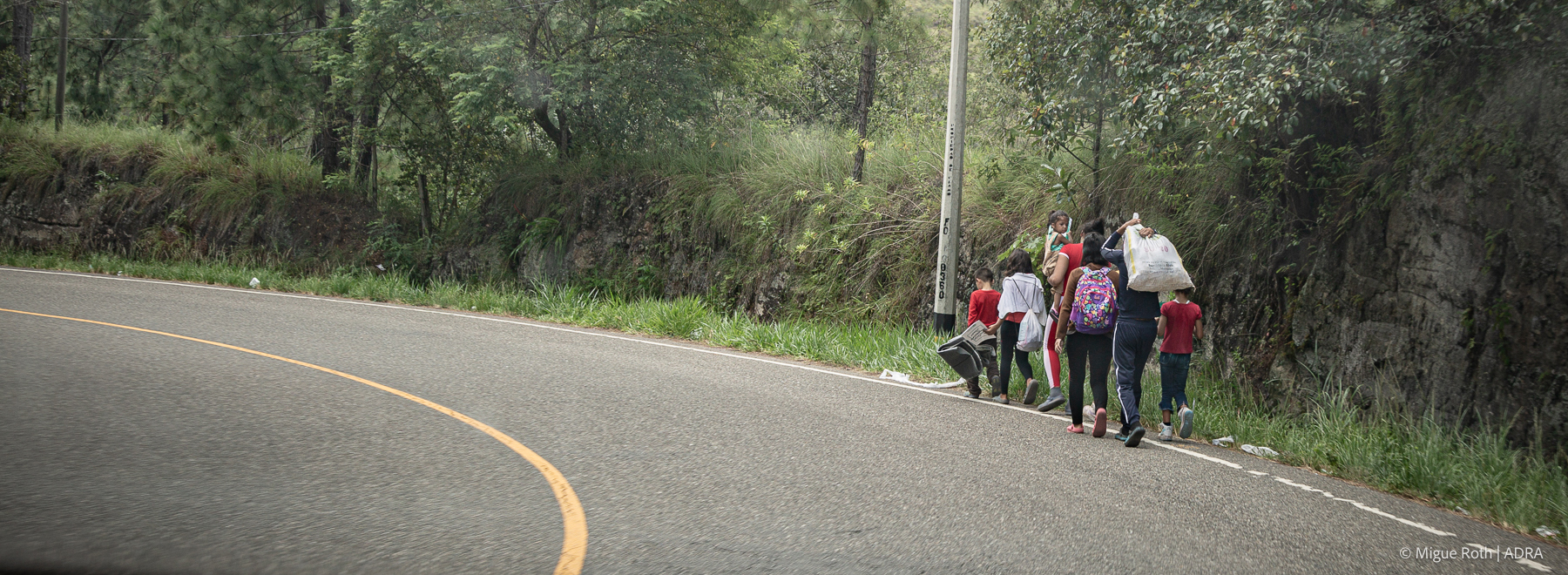
Every day, nearly 1,000 migrants risk their lives traveling through the Darién Gap, a treacherous stretch of dense jungle between Colombia and Panama. Families fleeing violence, poverty, and political instability embark on this dangerous journey in search of safety and a better future. The challenges they face are immense—wild animals, violent criminals, and severe weather are constant threats. Many make this journey isolated from the world, without access to food, water, or medical care. Tragically, some never reach the other side.
ADRA’s Response
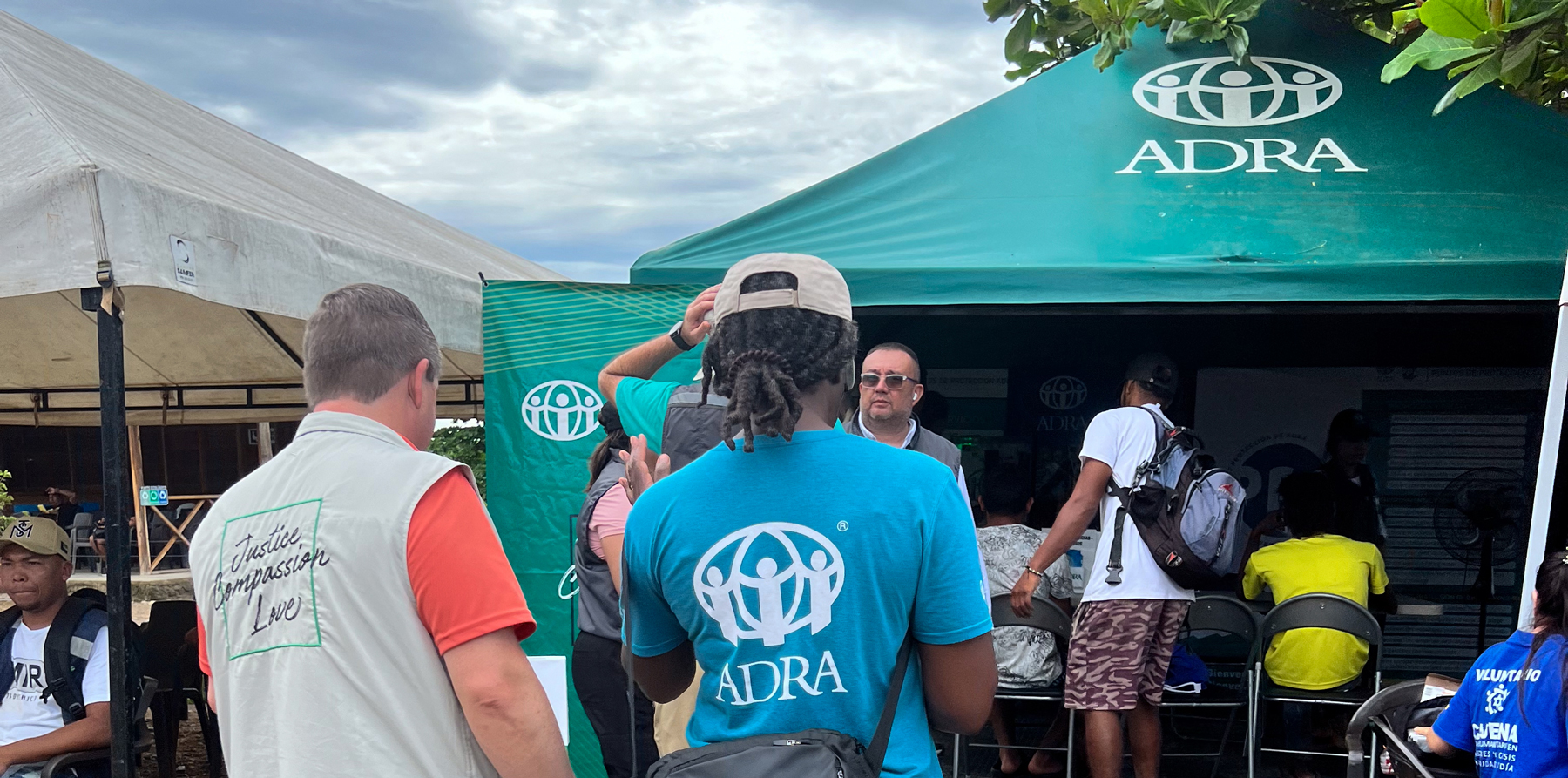
ADRA is on the ground, offering life-saving support to migrants at key points along the journey. We provide essential services such as clean drinking water, medical care, and Wi-Fi connectivity, ensuring families can stay connected and find help when they need it most. Our protection points in Colombia, Honduras, and Mexico are safe havens for migrants, offering guidance, hygiene services, and hope as they continue their journey toward a better life.